Blurry Vision at Night? The Diet and Screen Habits Behind It
Halos around lights and worse night vision aren't always just aging. Sugar, fried food, and dark-room scrolling all stress your eyes over time.
Hazy vision, halos around headlights and streetlights, or a blurry, wavy patch in the center of your sight aren't automatically signs of aging catching up with you. Halos are one of the earliest signs of cataracts, while distorted central vision often points to macular degeneration — and if your eyes also feel gritty and your night vision has gotten noticeably worse, it's worth looking at diet and screen habits before assuming it's just age.
Sugary Drinks and Desserts: How AGEs Build Up in the Eye
Frequent sugary drinks and desserts cause repeated blood sugar spikes, and that steady stream of glucose drives the formation of advanced glycation end products, or AGEs — compounds formed when sugar molecules bind to proteins. Research on human lenses has found AGE levels several times higher in cataract-affected lenses than in clear ones, and AGEs have also been linked to progression of age-related macular degeneration. When AGEs accumulate in the lens, the normally transparent proteins stiffen and lose clarity, scattering incoming light — which is part of why halos and glare become more noticeable at night. This isn't limited to people with diabetes; a diet consistently high in added sugar can push this process along even in otherwise healthy eyes.
Fried and Ultra-Processed Food's Link to Late Macular Degeneration
A University at Buffalo analysis of nearly two decades of dietary data from the Atherosclerosis Risk in Communities (ARIC) study found that people who ate a diet heavy in red and processed meat, fried food, refined grains, and high-fat dairy — a so-called "Western" pattern — were about three times more likely to develop late-stage age-related macular degeneration than those who didn't, though the link to early AMD was weaker. A more recent UK Biobank study of over 150,000 adults reached a similar conclusion from a different angle: a higher share of ultra-processed foods in the diet was significantly associated with greater risk of both AMD and cataract. Repeatedly heated cooking oil produces oxidized fats that promote oxidative stress, which can damage the tiny blood vessels feeding the retina over time.
Scrolling in the Dark and Why Your Eyes Feel Gritty
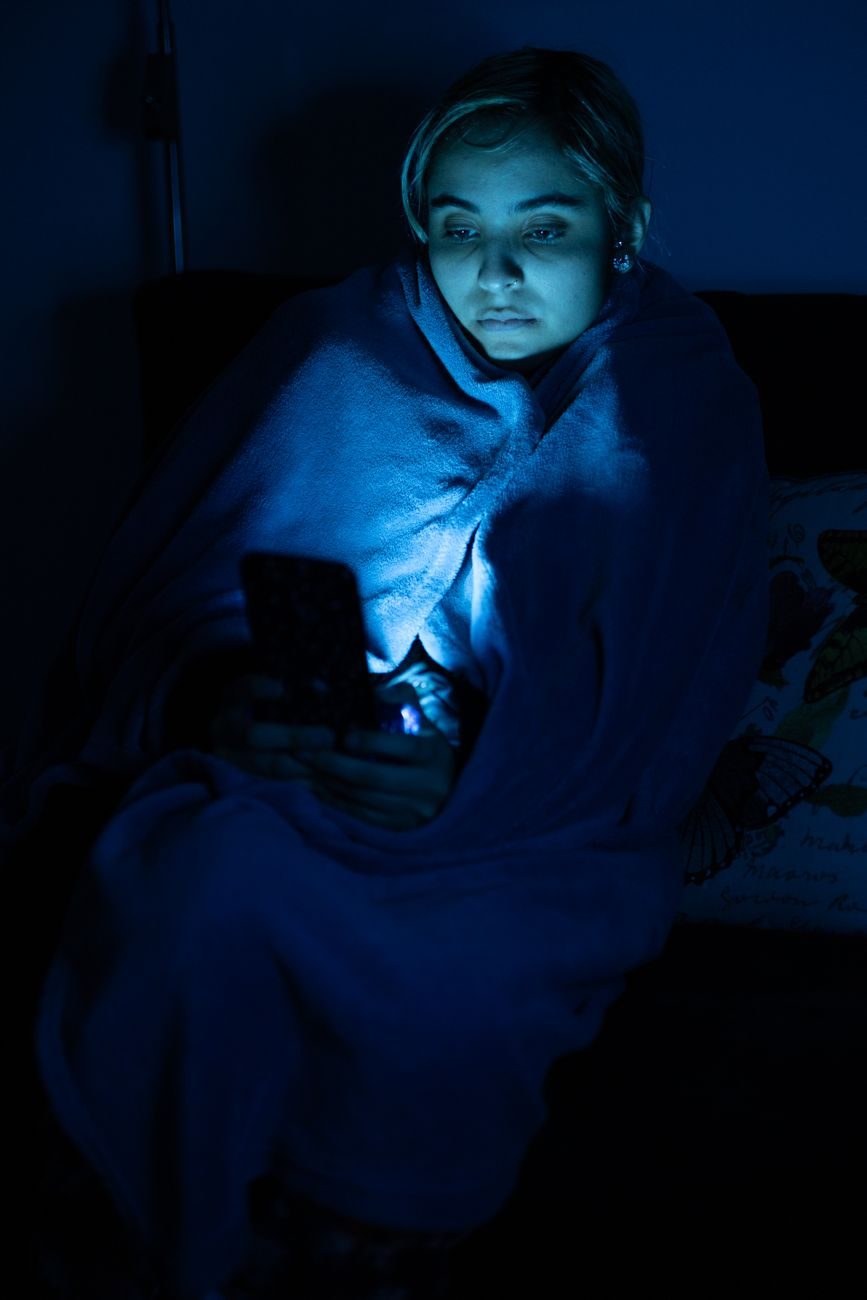
Scrolling on your phone in a dark room, especially right before bed, takes a toll too. According to the American Academy of Ophthalmology, people normally blink around 15 times a minute, but that rate can drop to as low as 5 to 7 times a minute while focused on a screen. Blinking less often means the tear film covering the eye doesn't get refreshed as frequently, which leaves eyes dry, gritty, and irritated — the hallmark of digital eye strain. Doing this in a dark room adds a second problem: the contrast between a bright screen and a dark room forces the pupils to work harder, and the resulting eye fatigue can compound next-day symptoms like blurred or strained vision.
What the Macula Gets Back
- Add dark leafy greens — Kale and spinach are rich in lutein and zeaxanthin, the two carotenoids that make up the eye's macular pigment. In the NIH-funded AREDS2 trial, adding 10 mg lutein and 2 mg zeaxanthin to the supplement formula did not by itself significantly slow progression to late AMD (hazard ratio 0.90). The clearer signals came from secondary comparisons: about 18% lower risk than the beta-carotene version of the same formula, and roughly 26% lower among the participants who were eating the least lutein and zeaxanthin to begin with.
- Swap fried food for oily fish — Salmon, mackerel, and other oily fish are rich in omega-3 fatty acids, which observational studies, including analyses published in JAMA Ophthalmology, have associated with a lower risk of AMD progression when paired with a diet rich in lutein and zeaxanthin. AREDS2 tested omega-3 supplements directly and found no benefit, so this is a case for the fish on the plate rather than the capsule.
- Follow the 20-20-20 rule — The American Optometric Association recommends looking at something roughly 20 feet (6 meters) away for 20 seconds every 20 minutes. This gives the eye's focusing muscles a break and tends to reset your blink rate, helping restore the tear film.
The Pattern, Not the Single Dessert
None of this means you need to cut out sugar, fried food, or your phone entirely. What matters more is the pattern: frequent sugary drinks, a diet heavy in fried and ultra-processed food, and long stretches of screen time in the dark all add up to more oxidative stress and less tear film stability for your eyes. Swapping in dark leafy greens, choosing oily fish over fried food more often, and practicing the 20-20-20 rule are small, well-supported changes. This article is for general information only and isn't a substitute for professional care — if symptoms like halos, night vision loss, or persistent dryness continue, see an ophthalmologist.
Related articles
 6 min read1 views
3 Ways Bad Air Days Affect Your Skin, Eyes, and Airways
Fine particles hit skin, eyes and airways at once. What the AQI bands actually mean, why mask ratings differ by country, and what genuinely helps.
 3 min read1 views
Nails Splitting, Peeling, or Ridging No Matter What You Try?
Nails splitting, peeling, or ridged no matter what you try? Wine, coffee, and instant noodles may be quietly working against you - here's what helps.
 3 min read1 views