3 Ways Bad Air Days Affect Your Skin, Eyes, and Airways
Fine particles hit skin, eyes and airways at once. What the AQI bands actually mean, why mask ratings differ by country, and what genuinely helps.
On days when the air quality index climbs into the orange or red zone, most people think first about their lungs. But fine particulate matter, especially PM2.5 (particles 2.5 micrometers or smaller), is small enough to affect more than your airways. It settles into pores, irritates the eyes, and works its way deep into the respiratory tract, all at the same time. Here's what's actually happening in each of those three places, what the index number on your phone does and doesn't tell you, and what genuinely helps.
How Fine Particles Break Down Skin Collagen
PM2.5 particles are small enough to lodge in pores and hair follicles, where they trigger the formation of reactive oxygen species (ROS). This oxidative stress activates enzymes called matrix metalloproteinases (MMP-1, MMP-2, and MMP-9), which break down collagen and elastin, the proteins that keep skin firm. Over time, this shows up as fine lines, dullness, and slower recovery from everyday skin stress. Population data points the same way: in a Chinese cohort, higher indoor PM2.5 exposure was associated with more pigment spots on the forehead and more wrinkling on the upper lip.
Why Polluted Air Leaves Eyes Dry and Airways Inflamed
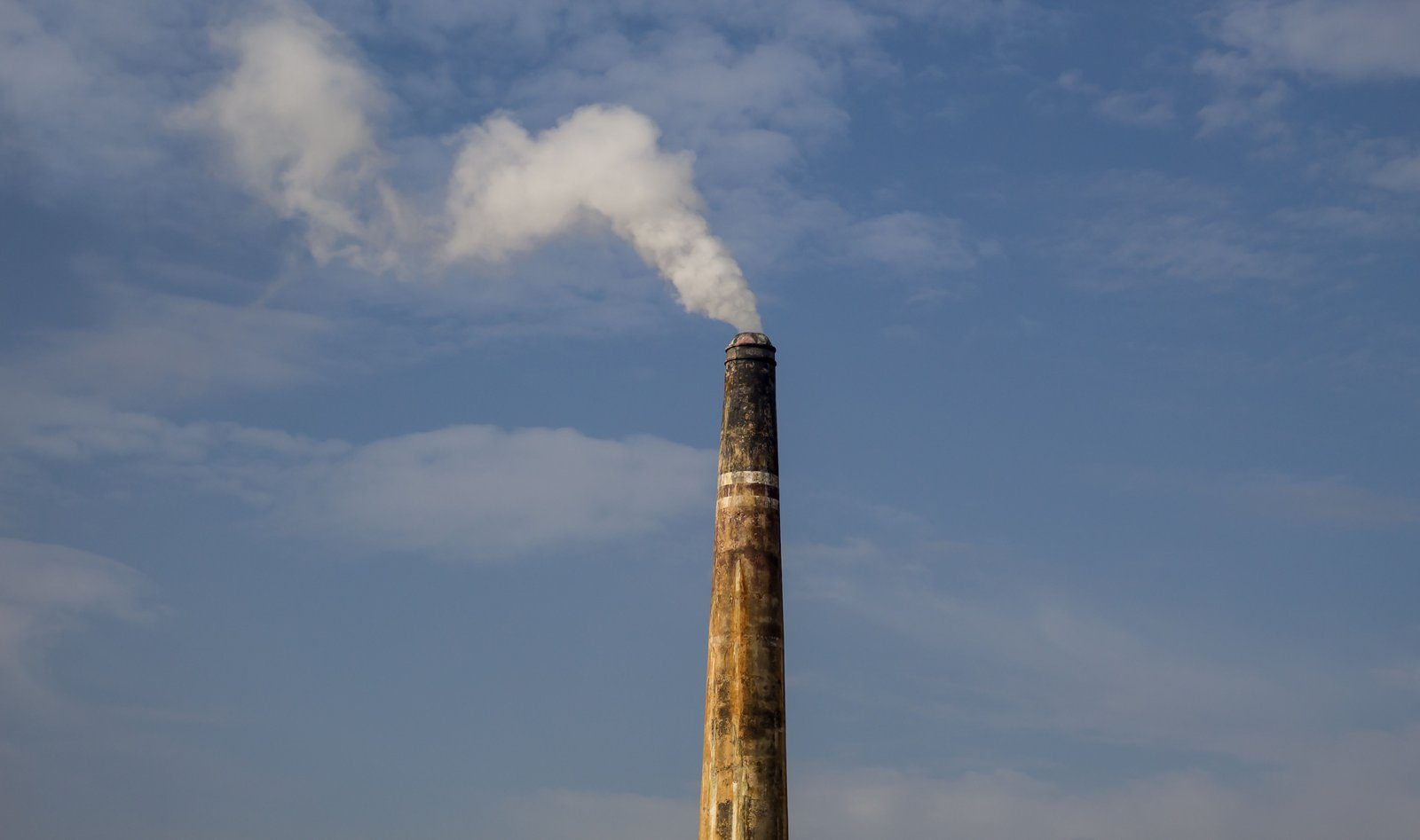
The same oxidative stress that affects skin also disrupts the meibomian glands along your eyelids, the ones responsible for the oily layer that keeps tears from evaporating too fast. When that layer breaks down, eyes feel dry, gritty, and more easily irritated, especially on windy or high-pollution days. Lower in the body, particles small enough to bypass your nose's natural filtering reach deep into the bronchial tubes, where laboratory studies on human airway cells show PM2.5 exposure raises inflammatory markers like IL-6 and TNF-alpha. That inflammation is what turns into coughing, throat tightness, or shortness of breath after a few hours outside. The World Health Organization notes that both PM10 and PM2.5 penetrate deep into the lungs, but that PM2.5 can also enter the bloodstream, which is why its effects are primarily cardiovascular and respiratory but reach other organs as well.
What the Number on Your Phone Actually Means
The U.S. Air Quality Index is the EPA's tool for reporting outdoor air quality, and it runs in six color-coded bands: Green, Good (0 to 50); Yellow, Moderate (51 to 100), acceptable but with some risk for unusually sensitive people; Orange, Unhealthy for Sensitive Groups (101 to 150); Red, Unhealthy (151 to 200); Purple, Very Unhealthy (201 to 300), a health alert for everyone; and Maroon, Hazardous (301 and higher). For each pollutant, an AQI value of 100 generally corresponds to the level of the short-term national ambient air quality standard.
Two things follow from that, and both trip people up. First, the AQI is an index, not a concentration — it has no units, and the same PM2.5 concentration can produce a different index number under a different country's scale. Comparing an AQI reading from one country against another country's reading is not meaningful. Second, health guidelines are stated in micrograms per cubic meter, not index points. WHO's 2005 guideline level for long-term PM2.5 exposure was 10 µg/m³, and the 2021 global air quality guidelines set it lower still. In 2019, more than 90% of the world's population lived where concentrations exceeded even that 2005 level, and WHO's own scenario analysis found that nearly 80% of PM2.5-related deaths could be avoided if pollution came down to the levels in the updated guideline.
Who Needs to Be More Careful
WHO singles out several groups as more vulnerable to air pollution: people with chronic conditions such as asthma, chronic obstructive pulmonary disease, and heart disease, along with older adults, children, and pregnant women. If you're in one of those groups, the Orange band matters to you at a point where the general public is less likely to be affected — that is precisely what "Unhealthy for Sensitive Groups" is describing. It is also worth knowing that in 2013 WHO's International Agency for Research on Cancer classified outdoor air pollution and particulate matter as carcinogenic, which is why long-term exposure is treated differently from a single bad-air afternoon.

Mask Ratings Don't Cross Borders
The rating printed on a respirator tells you which country's standard it was certified against, not a universal grade. N95 is the U.S. NIOSH designation; FFP2 is the European standard; KF94 is Korean and KN95 is Chinese. They are broadly comparable in filtration but they are separate certification systems, so a mask carrying one mark does not automatically hold the others. Buy to the standard used where you live, and check that the certification mark is actually printed on the mask itself.
Then worry about fit, which matters more than the filter material. A respirator only performs at its rating if air is forced through the filter rather than around it, so gaps at the nose bridge or cheeks undo the whole thing. Do a quick seal check each time: cover the mask with both hands, breathe out, and feel for leaks around the edges. Facial hair along the sealing surface is the single most common reason a good mask underperforms.
Sealing Gaps Rather Than Staying Indoors
- A properly fitted respirator — A good seal against your face is what makes the difference; a loose-fitting mask lets particles leak in around the edges no matter how good the filter material is.
- A vitamin C serum plus moisturizer — Vitamin C is one of the most studied topical antioxidants for offsetting oxidative damage from environmental exposure, and it supports the collagen your skin is losing. Apply it after cleansing, and always cleanse thoroughly once you're back indoors.
- Wraparound sunglasses and artificial tears — Wraparound styles block more particles from reaching your eyes directly, and preservative-free artificial tears rinse out whatever gets through instead of letting it sit on the eye's surface.
- A portable air cleaner with a HEPA filter — Indoors, filtering the air you already have is usually easier than sealing the building. Match the unit's rated room size to the room you actually run it in, and change filters on the schedule in the manual, since a loaded filter stops helping.
Mask Up, Then Wash It Off
Bad air days don't call for staying indoors indefinitely, but a few small habits make a real difference: check the index band rather than the raw number, wear a respirator certified to your country's standard and get the seal right, cleanse and moisturize once you're inside, and give your eyes a rinse if they feel irritated. This article is for general information and isn't a substitute for medical advice — if you have ongoing eye irritation, a persistent cough, wheezing, or any breathing difficulty, see a healthcare provider, and if you already manage asthma or a heart condition, ask your clinician how your own action plan should change on high-pollution days.
Related articles
 3 min read1 views
Nails Splitting, Peeling, or Ridging No Matter What You Try?
Nails splitting, peeling, or ridged no matter what you try? Wine, coffee, and instant noodles may be quietly working against you - here's what helps.
 3 min read1 views
Dizziness Isn't Always Low Blood Sugar: 3 Habits Behind It
Skipping meals then eating sugar, coffee, alcohol, and salty food can each trigger dizziness through different mechanisms. Here's the research and what helps.
 4 min read1 views