Uterine Fibroids Aren't Just Heavy Periods: What Research Says
Uterine fibroids reach up to 80% of US women by age 50. See what NIH, ACOG and OWH sources say about red meat, beer, dairy and vitamin D levels.
If your periods have gotten noticeably heavier over the past year, or you feel a dull, constant fullness low in your pelvis, it is tempting to file it under "my cycle has always been rough" and move on. Uterine fibroids are common enough that this happens constantly: the HHS Office on Women's Health estimates that about 20 to 80 percent of women develop fibroids by the time they reach age 50, and most never notice them at all. What gets lost in that reassurance is that the research on what raises and lowers risk is far more specific than "bad luck," and some of it is about what is on your plate.
Why Fibroids Grow, and Why Two Women Feel Nothing Alike
Fibroids, or leiomyomas if you see the word on a chart, are benign growths of muscle and connective tissue in the wall of the uterus. ACOG describes estrogen and progesterone as the hormones that appear to be involved in their growth, which is why they show up during the reproductive years and often shrink once a woman reaches menopause. How much you feel depends less on how many you have than on where a single fibroid sits: one just under the uterine lining can cause heavy bleeding even when it is small, while a much larger one on the outer wall may do nothing but press on the bladder.
NICHD lists the risk factors nobody can change, including age, family history, African American race, obesity, high blood pressure and never having been pregnant, right next to one that is at least measurable: vitamin D deficiency. That single line is the reason nutrition keeps coming up in fibroid research at all, and it is worth separating the findings that are solid from the ones that are still thin.
The Two Everyday Habits That Keep Turning Up in the Data
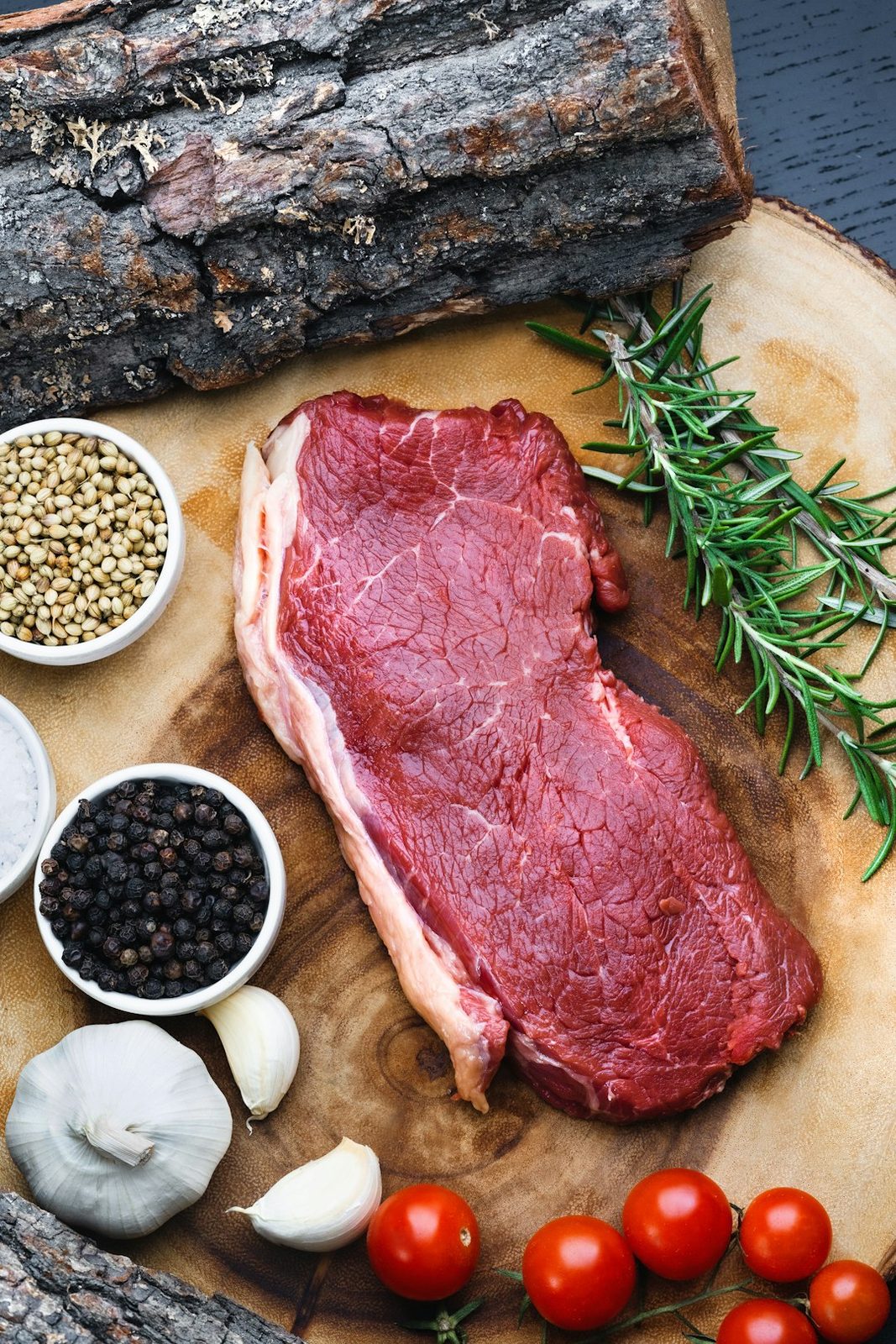
Red meat is the first. The Office on Women's Health states it plainly: eating a lot of red meat and ham is linked with a higher risk of fibroids, while eating plenty of green vegetables seems to protect against them. The number behind that sentence comes from an Italian case-control study of 843 women with fibroids and 1,557 without, in which women in the top third for beef and other red meat had an odds ratio of 1.7 (95% CI 1.4 to 2.2) while the top third for green vegetables came in at 0.5. That design can show an association, not a cause, and nobody has run a trial assigning women to eat steak.
Alcohol is the second. In the Black Women's Health Study, researchers followed 21,885 premenopausal women and found risk climbed with years of drinking and with current intake, beer most clearly of all: compared with non-drinkers, women having seven or more beers a week had a 57 percent higher rate of fibroids (IRR 1.57, 95% CI 1.17 to 2.11). Cigarette smoking and caffeine showed no overall association in the same cohort. The usual explanation, that alcohol shifts ovarian function and hormone metabolism, is a hypothesis the authors raise rather than something the study measured.

Start With the Changes That Have Numbers Behind Them
- Move two red-meat dinners a week to fish, beans or lentils — the same Italian data that flagged beef also found the highest green-vegetable intake tracked with roughly half the odds, so this is as much about adding vegetables as subtracting steak.
- Keep beer well under seven a week — that is where the association became clear in the cohort above. At one to six beers weekly the rate ratio was 1.18 and its confidence interval still touched 1.0, meaning no reliable difference was shown at that level.
- Get a vitamin D level before you buy a supplement — in the NIEHS Uterine Fibroid Study, women whose blood 25-hydroxyvitamin D was above 20 ng/mL had 32 percent lower odds of fibroids than women below it (adjusted OR 0.68, 95% CI 0.48 to 0.96), and reporting an hour or more of daily sun ran in the same direction. A 2024 meta-analysis in JOGC pooling 26 studies found women with fibroids averaged 5.5 ng/mL less. The RDA for adults 19 to 70, pregnancy and breastfeeding included, is 600 IU (15 mcg) a day and the tolerable upper limit is 4,000 IU, so high-dose capsules are a conversation with a clinician rather than a shopping decision.
- Do not drop dairy on principle — in that same cohort, women eating four or more servings of dairy a day had a 30 percent lower rate of fibroids than those eating less than one (IRR 0.70, 95% CI 0.58 to 0.86), with milk showing the clearest pattern. Soy intake, often used as a substitute, showed no relationship either way.

What Still Needs a Doctor
None of this substitutes for a diagnosis, and none of it is a treatment for a fibroid that is already causing symptoms. Fibroids are confirmed on ultrasound, and ACOG notes they are often found during a routine pelvic exam before anyone goes looking for them. Call your OB-GYN if bleeding soaks through protection far faster than it used to, if periods run longer than a week, if you are newly short of breath or lightheaded, or if pelvic pain is severe. In the US, sudden severe pain, bleeding you cannot control, or fainting is a 911 call rather than a wait-and-see. The reassuring part is real too: fibroids are almost never cancerous, and many of them never need treatment at all.
So before the next appointment, one question is worth sitting with: over your last three cycles, how much protection did you actually go through on the heaviest day, and has anyone in a clinic ever heard that number out loud? This article is general health information and is not medical advice.
Related articles
 4 min read1 views
Vaginal Yeast Infections: What Raises the Risk, and What Doesn't
Sugar in food is not on the official risk lists for thrush. What the NHS and the US Office on Women's Health actually name, and when to see a doctor.
 4 min read1 views
Why Do Hot Flashes Get Worse After Coffee, Wine, or Chili?
Caffeine, alcohol and spicy food top every hot flash trigger list. Here is what the research really shows, and the one change worth testing first.
 7 min read0 views